Purchase-led scaleWeekly decisions stay tied to purchases, revenue efficiency, and what actually deserves more budget.
Tracking that holds upPixel, CAPI, and attribution noise are cleaned up so every read feels clearer and more usable.
Creative that keeps movingFresh hooks, budget shifts, and testing loops keep the account learning instead of going stale.
Meta performance control board
Live revenue-first account proof
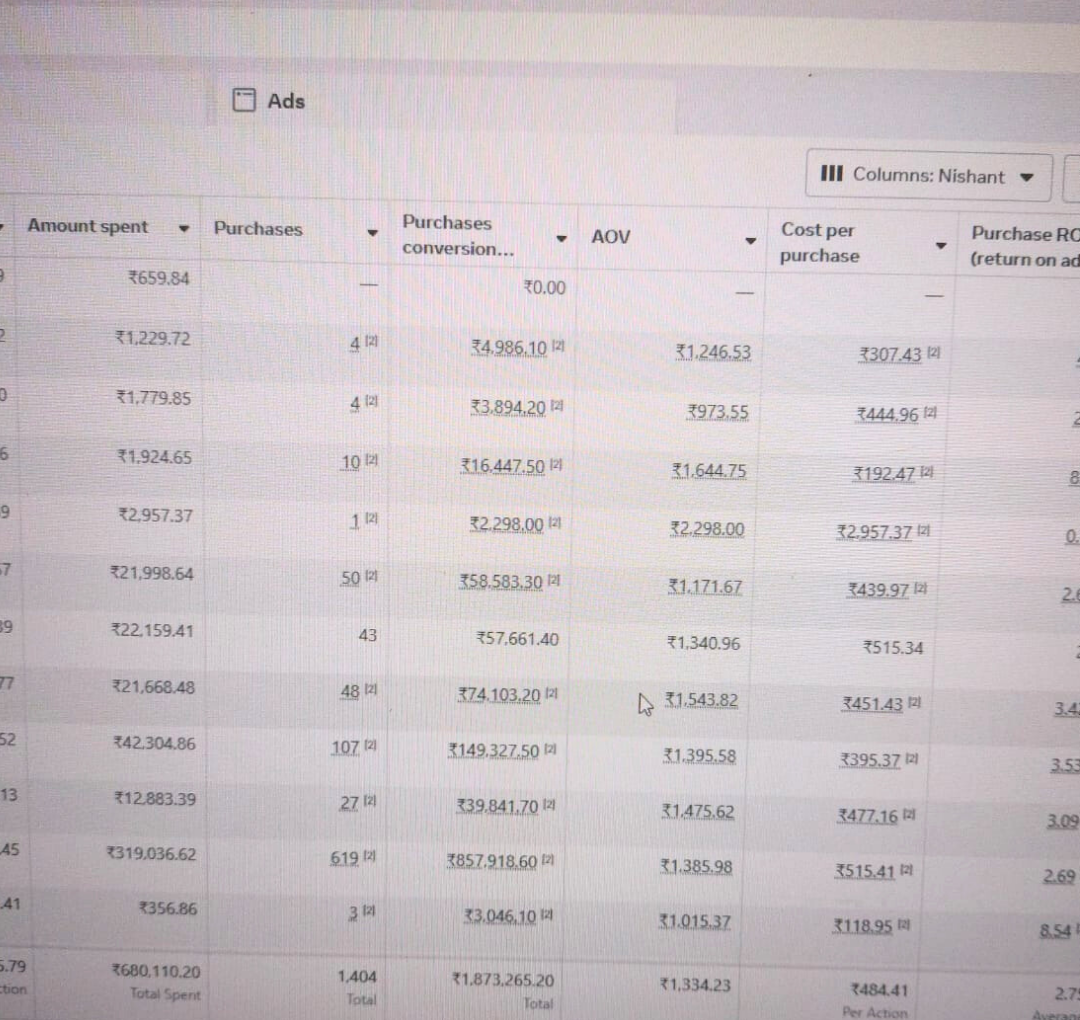
Real dashboard
Documented ROAS
13.47x
Average purchase ROAS visible in proof
Revenue shown
₹26.96L
Purchase conversion value on the account view
Spend shown
₹2.00L
Tracked media spend in the same snapshot
Account view
Local proof image
What we tighten first
Pixel and CAPI alignment, offer and creative hooks, retargeting windows, and reporting signal quality.
Why this matters
The goal is not more dashboards. It is faster weekly decisions, tighter spend allocation, and creative testing that compounds.
Weekly sprint
Fix the signal, launch stronger angles, and shift budget toward what is clearly converting.
Outcomes
What True Meta Ads Management Actually Changes
We don’t just tweak campaigns. We overhaul your acquisition strategy to deliver predictable, profitable growth.
Creative velocity
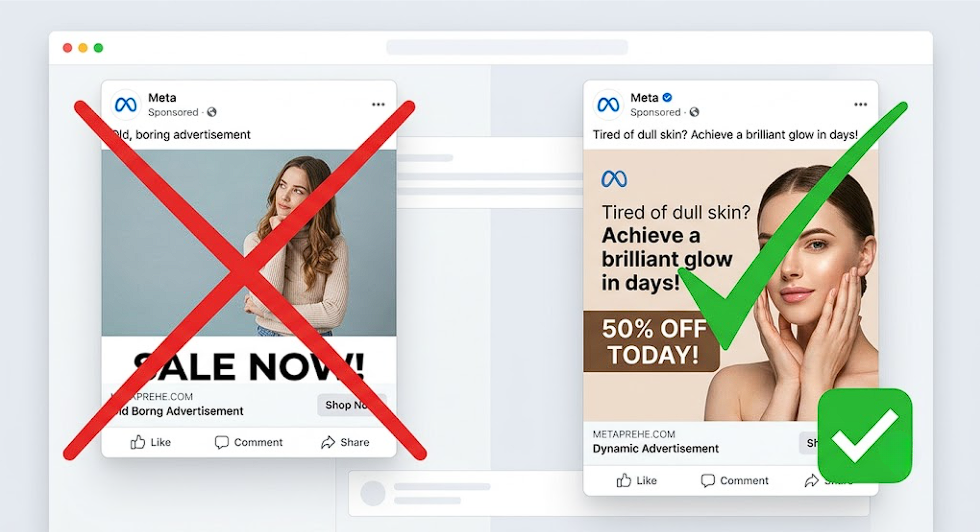
Defeat Ad Fatigue with Creative Velocity
Relying on the same old static images will drain your budget. We solve ad fatigue by constantly feeding the algorithm with fresh, data-backed creatives. By rapidly testing new angles, precise persona hooks, and compelling offers, we find the messaging that makes your ideal customer stop scrolling and buy.
Lower CAC & stronger ROAS
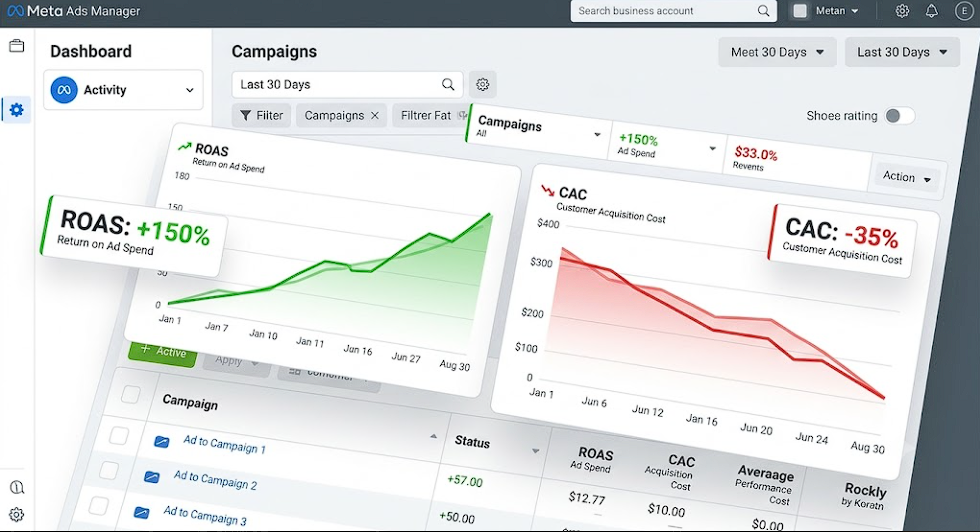
Lower Your CAC & Widen Your Profit Margins
Revenue means nothing if you aren’t profitable. Our focus isn’t just generating clicks; it’s driving down Customer Acquisition Cost. By optimizing your account structure and aggressively cutting wasted spend on underperforming ads, we make every rupee work harder toward measurable profit.
Predictable scaling
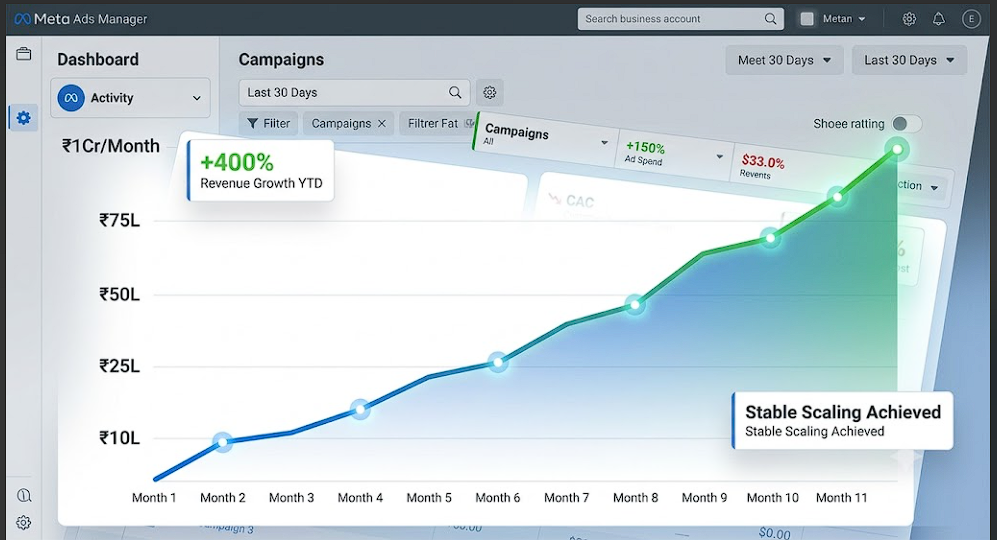
Stable, Predictable Scaling Month Over Month
Scaling your D2C brand shouldn’t feel like a gamble. We build robust Meta ad systems designed to handle increased budgets without breaking. When we find a winning creative and audience combination, we scale it carefully, using purchase and revenue signals to protect efficiency as budgets increase.
Brands We Run Ad Spend For
Proof starts early: these are the kinds of brands that trust ProfitPixel before they trust us with their accounts.
Purchase-led scaleWeekly decisions stay tied to purchases, revenue efficiency, and what actually deserves more budget.Tracking that holds upPixel, CAPI, and attribution noise are cleaned up so every read feels clearer and more usable.Creative that keeps movingFresh hooks, budget shifts, and testing loops keep the account learning instead of going stale.
The Meta Growth Engine
How We Scale Your Brand
We don’t just manage campaigns; we build end-to-end revenue systems. Here is exactly what happens when you partner with us.
1. Strategic Account Architecture
We rebuild your account with simplified, machine-learning-friendly structures that reduce audience overlap, cut wasted spend, and help Meta find more high-intent buyers.
2. Performance Creative Production
We produce scroll-stopping visual assets and direct-response videos that combine sharp hooks, product proof, and action-led storytelling to move people from attention to purchase.
3. Copywriting & Offer Strategy
We craft persona-specific hooks, benefit-led headlines, and compelling offers so your audience feels understood, sees the value quickly, and is ready to buy.
4. Active Media Buying & Scaling
We test audiences, manage budgets daily, and scale winning ad sets horizontally and vertically without exhausting your audience or letting efficiency collapse.
5. Advanced Tracking & CAPI
We implement Meta CAPI and robust pixel protocols so add-to-carts and purchases are documented accurately. Better signal quality gives Meta more reliable data to optimize against.
6. Transparent ROI Reporting
You get a live, customized view of spend, purchases, and revenue generated so every decision is grounded in ROI, not vanity metrics or confusing spreadsheets.
Our expertise
Built for the Modern Meta Ads Stack: Pixel, CAPI, Creative and CRO
The expertise here is less about agency theatre and more about operating range. We are comfortable inside Business Manager cleanup, pixel and CAPI alignment, ASC rollout logic, retargeting depth, creative test planning, and the weekly reporting discipline needed to scale without losing trust in the numbers.
Meta operations
Partner-ready foundations
Business Manager hygiene, catalog sanity, domain verification, event prioritization, and access structure that can support scale and future partner credentials when applicable.
Documented spend
₹34.75L+ shown on-page
The three featured proof snapshots show more than thirty-four lakh rupees in tracked Meta spend, grounded in real account views rather than generic placeholders.
Revenue signal
3,280 visible purchases
Across the featured account views below, you can see 3,280 purchases tied to live campaign reporting, alongside tracked purchase conversion value and efficiency metrics.
Creative velocity
Weekly testing rhythm
Hooks, offers, statics, UGC, landing page inputs, and audience hypotheses are meant to move every week, not wait for a quarterly refresh.
Success stories
Meta proof that keeps the conversation anchored in outcomes.
These cards pair the live account screenshots with the exact metrics visible in them, so the page feels grounded in real revenue work instead of abstract promises.
Case study 01
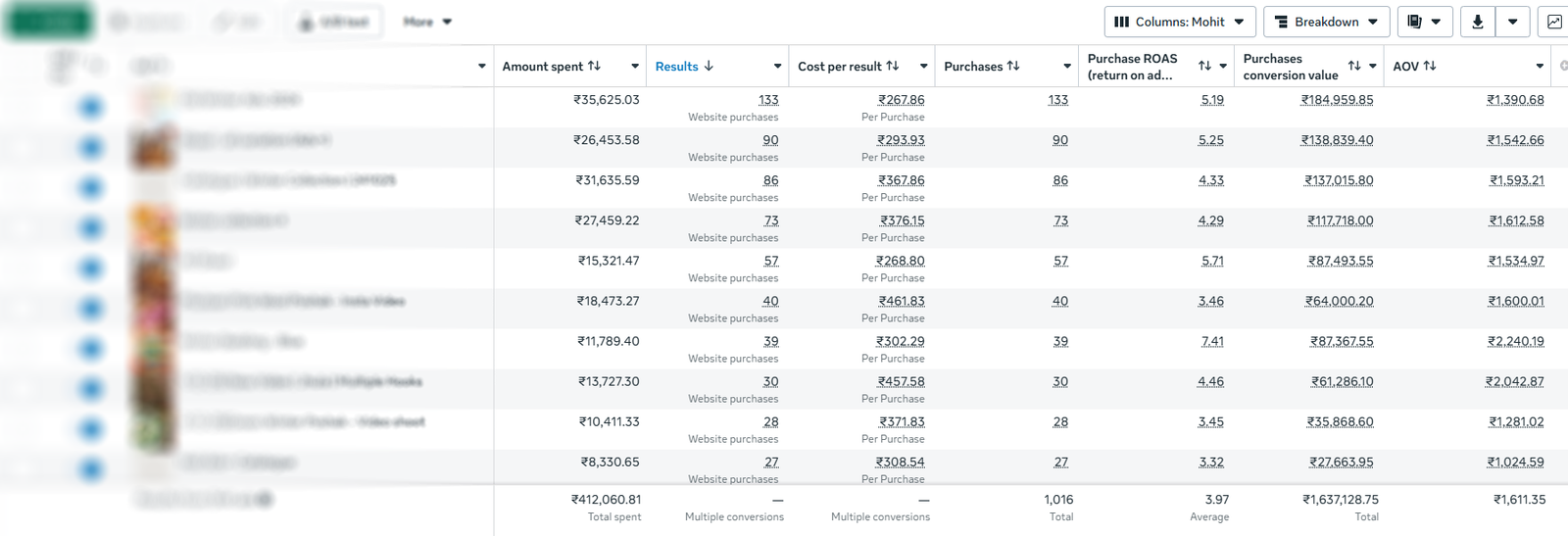
Scale to 1,016 Purchases Maintaining a Strong 3.97 ROAS.
This account reached 1,016 purchases with ₹16,37,128 in purchase conversion value on a total spend of ₹4,12,060. The visible CPA was held at ₹405.57. With a 3.97 average ROAS across winter collections and video creatives, this is a clear example of driving high-volume sales without sacrificing profitability.
Spend
₹4.12L
Purchases
1,016
CPA
₹405
Avg. ROAS
3.97x
Case study 02
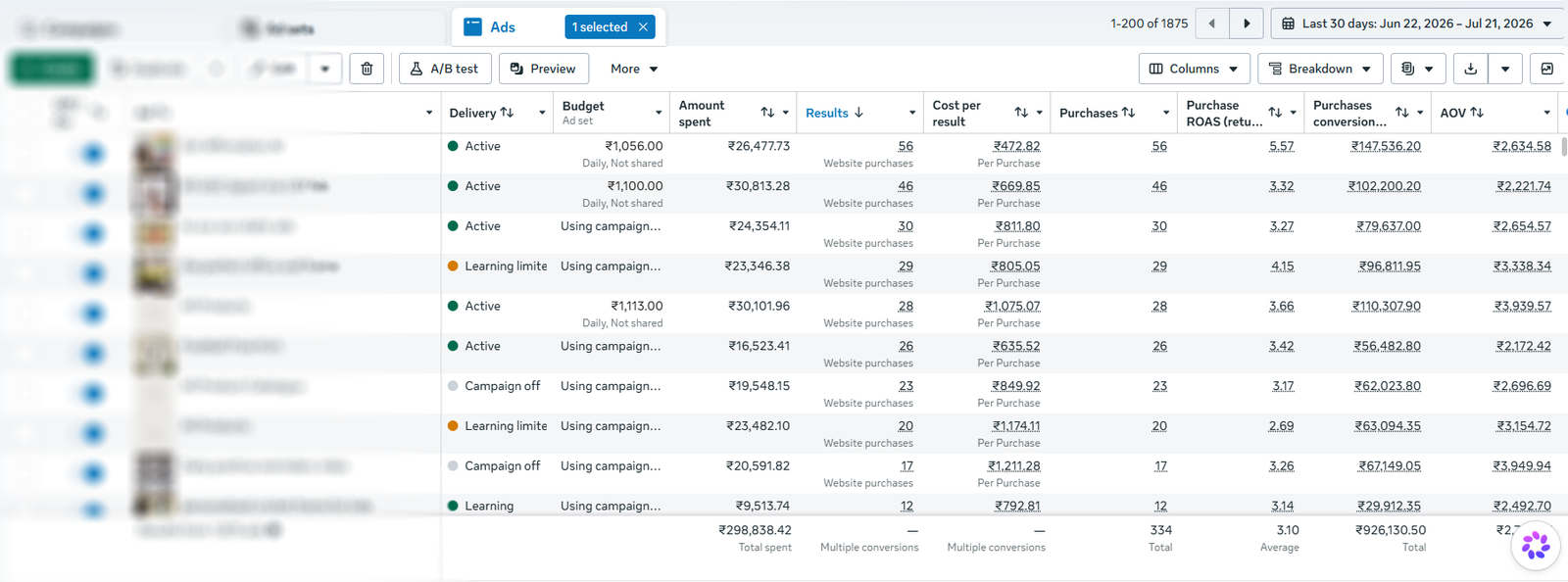
Generating ₹9.26 Lakhs in Revenue with a Solid 3.10 ROAS.
This optimized account drove 334 purchases and generated ₹9,26,130 in purchase conversion value on ₹2,98,838 in spend. A diverse creative mix including AI affirmations, UGC videos, and personalized static ads maintained a 3.10 average ROAS and an effective CPA of approximately ₹895 for high-AOV gifting products.
Spend
₹2.98L
Purchases
334
CPA
₹895
Avg. ROAS
3.10x
Case study 03
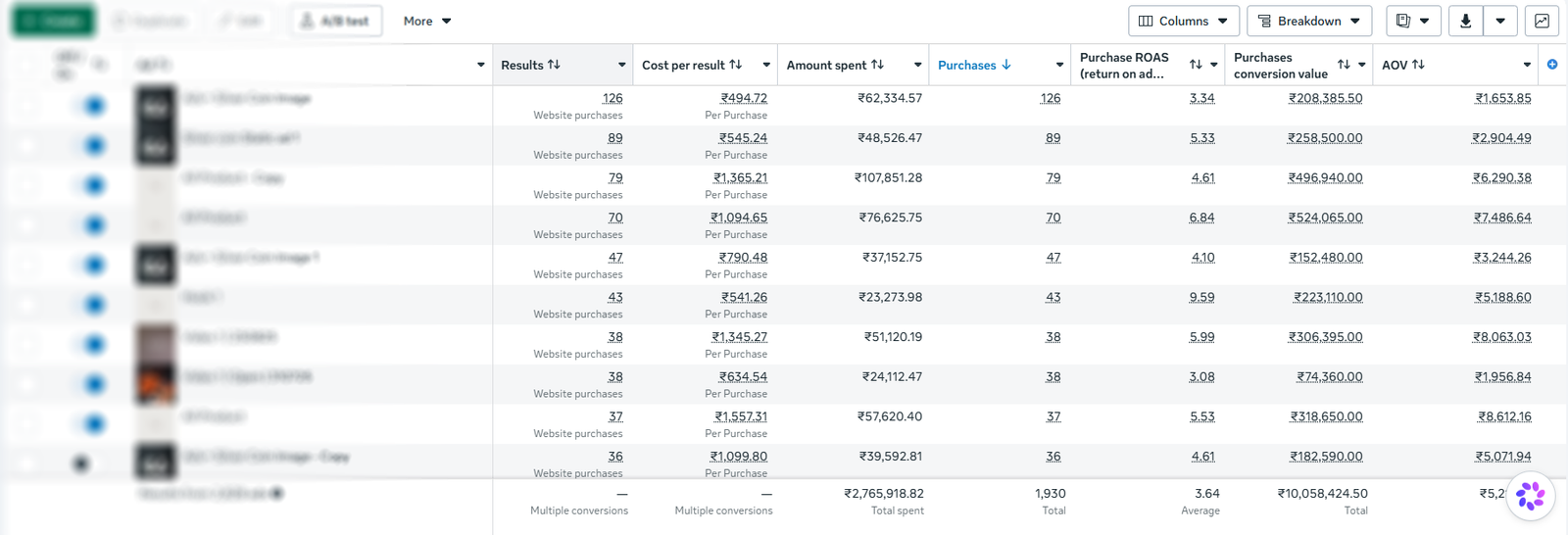
Scaling Past ₹1 Crore in Revenue with High-Ticket Products.
This account drove 1,930 purchases and crossed ₹1 Crore in purchase conversion value (₹1,00,58,424) on ₹27,65,918 in spend. Despite premium, high-AOV products such as silver coins, the account maintained a profitable 3.64 average ROAS while keeping overall CPA controlled at approximately ₹1,433.
Total spend
₹27.65L
Purchases
1,930
Revenue generated
₹1.0Cr+
Avg. ROAS
3.64x
Process
How we turn Meta from noisy into manageable.
The process is designed to reduce wasted motion. We fix the signal first, build a sharper testing plan, deploy cleaner campaign structure, and keep reporting tied to decisions instead of vanity metrics.
Signal quality before scale pressure
Creative and media decisions in the same loop
Weekly actions, not passive monthly reporting
01
Step 1
Audit and tracking reset
We review account hygiene, pixel and CAPI status, event hierarchy, attribution gaps, and any obvious structural waste that is distorting decisions.
Output: a clean measurement checklist, priority fixes, and a short list of fast wins.
02
Step 2
Offer and creative mapping
Hooks, concepts, UGC scripts, statics, audience angles, and landing page friction points are prioritized around the best conversion opportunities.
Output: a focused testing roadmap instead of random creative churn.
03
Step 3
Campaign structure deployment
We launch or refine ASC, manual testing structures, retargeting layers, exclusions, and budget logic that matches the business objective.
Output: a cleaner account architecture with more reliable control points.
04
Step 4
Weekly test and budget shifts
Creative winners are scaled, weak angles are retired, and spend is moved with more confidence as fresh data comes in.
Output: faster learning loops and less budget trapped in underperforming setups.
05
Step 5
Reporting and next actions
You get a clear read on revenue, efficiency, signal quality, creative winners, and the next actions we would take to keep momentum.
Output: decisions that are easier to trust and easier to execute the following week.
FAQ
Common Meta Ads questions we get from brands.
These are the questions that usually come up before a brand commits to rebuilding, fixing tracking, or scaling spend on Meta.
Do you handle both ecommerce and lead generation Meta accounts?
Yes. The structure changes by business model, but the core work still revolves around signal quality, offer clarity, creative testing, and disciplined reporting.
Can you fix Meta Pixel, Conversions API, and domain verification issues?
That is a major part of the work. We can help clean up event setup, domain verification, CAPI alignment, and attribution logic so the account becomes more usable again.
Do you help with creatives or only media buying?
We do not treat creative as separate from media. We help shape briefs, hooks, concepts, and testing plans so performance and production are working toward the same learning goal.
Do you run Advantage+ Shopping Campaigns and manual campaigns together?
Often yes. We use automation where it makes scaling easier, and we keep manual structure where segmentation, learning control, or retargeting visibility still matters.
How often will we get reports and recommendations?
We work around a weekly reporting and optimization rhythm, so you are not waiting a month to understand what changed or what deserves the next test budget.
What kind of budgets make Meta management worthwhile?
There is no single threshold, but the channel gets much more useful when you can support consistent testing, not just occasional boosts. We can sanity-check fit during the audit call.
Can you work alongside our internal team, freelancer, or creative partner?
Absolutely. We can own the whole channel, plug into an internal growth team, or become the measurement and optimization partner that keeps the Meta side accountable.
Clients say it better than case studies
A quick look at what founders and operators say after the account, tracking and growth system get cleaner.
"Nishant has been managing our performance marketing for over 1.5 years, and his results have been consistently impressive. What sets him apart is his ability to understand the brand, collaborate closely with founders, and proactively solve challenges. I highly recommend him to any business looking for a reliable performance marketer."
Harsh
Founder, Helia.com
"Nishant made a significant impact on our brand by deeply understanding our product and customer behavior. His data-driven marketing strategies helped us achieve strong results. He is a highly skilled performance marketer and a pleasure to work with."
Arun
Co-Founder, Elephant Trunk
"We worked with Nishant during a critical stage of our business, and the results were excellent. His performance marketing expertise, strategic approach, and commitment to delivering outcomes made a real difference. Wishing him continued success ahead."
Jitendra Kataria
Founder, Your Creative Society
"Nishant worked with us for over a year and consistently focused on driving strong ROAS and business growth. Along with his marketing expertise, his leadership and team management skills were exceptional. I highly recommend him to any organization looking for a results-oriented performance marketer."
Ankit Galavath
Co-Founder, TotalBin
Ready to grow with Meta Ads? Book a Growth Call.
Discuss your Meta Ads growth goals, current ad spend, and business priorities. We will explore whether ProfitPixel is the right partner and outline the next steps.
Ready To Grow Profitably With Meta Ads? Book a Growth Call.